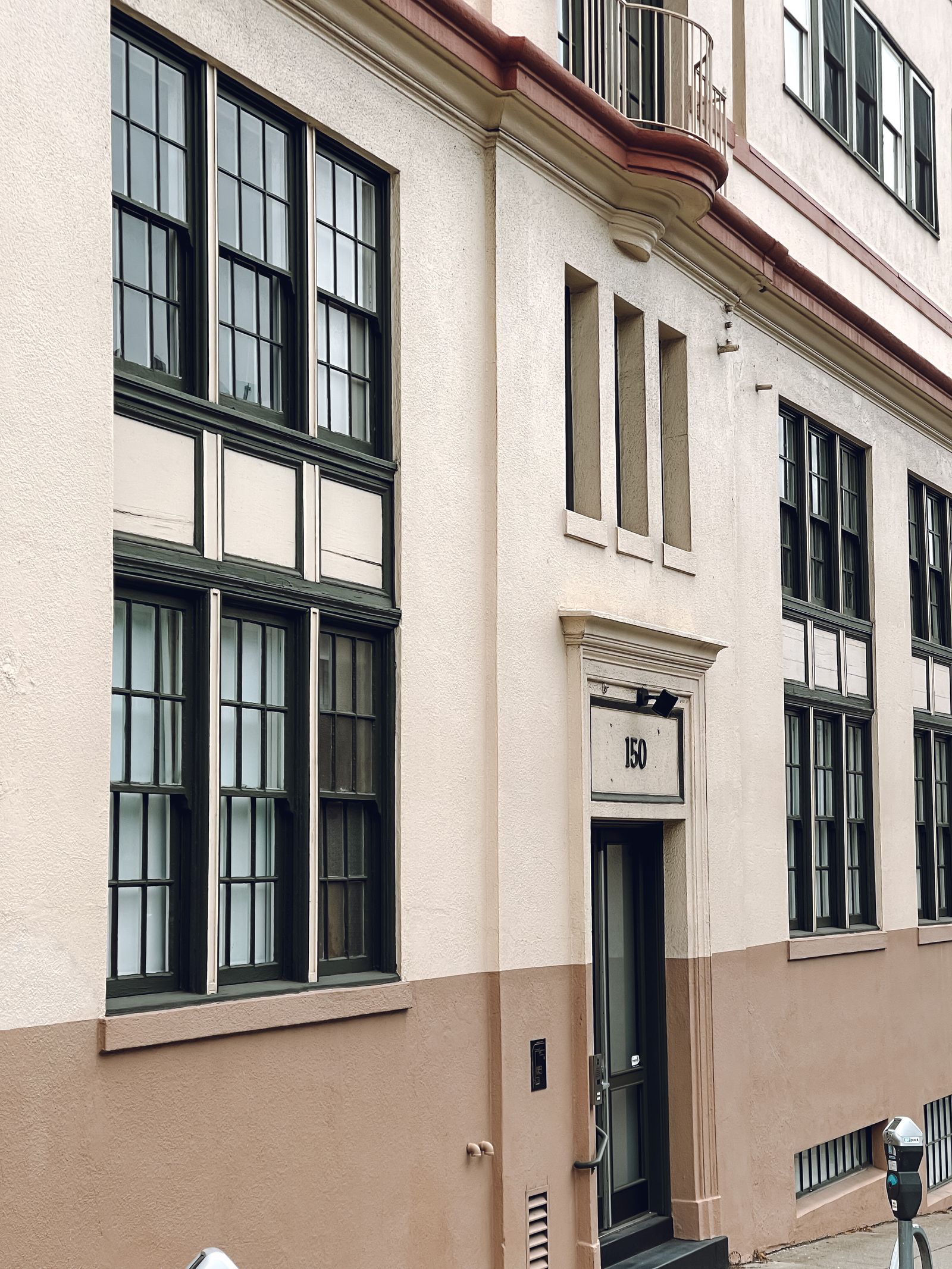
What soft washing can address on a Savannah facade
Soft washing combines a compatible cleaning solution, controlled application, dwell time, and an appropriate rinse. On suitable commercial surfaces, it can address organic growth, pollen, mildew-like staining, bird residue, and some atmospheric film without depending on high impact alone. Results depend on material, chemistry, concentration, temperature, dwell time, rinse, weather, and protection. A soft wash is not simply a pressure washer turned down, and it is not a universal response to salt, mineral scale, oxidation, damaged coatings, or active water intrusion.
Savannah buildings often need a zone-by-zone assessment. Historic brick and mortar, painted masonry, concrete, glass, metal, EIFS, stucco, signs, canopies, and sealants can respond differently. A test area can show whether the deposit is likely organic, mineral, salt-related, oxidized, embedded, or connected to a water path. If the property needs masonry restoration, glass polishing, painting, coating replacement, sealant work, or leak diagnosis, those needs should be separated from routine washing.
Soft washing can be practical for a broad facade when the crew can protect guests, patients, students, workers, landscaping, air intakes, vehicles, neighboring property, and drainage paths. The proposal should state expected improvement and limitations. A clean-looking section does not prove that a failed gutter, leaking joint, or damaged historic wall has been corrected.
- Often fits compatible organic and atmospheric deposits after material and test-area review.
- Requires chemistry control, dwell-time management, rinsing, protection, and weather planning.
- Does not replace historic masonry work, glass restoration, coating repair, sealant work, or leak diagnosis.
- Should be scoped by elevation when the property combines old and new materials.
Where controlled pressure can help, and where it can damage
Controlled pressure may fit selected durable concrete, hardscape, loading areas, and other surfaces that can tolerate the chosen pressure, distance, nozzle, flow, and technique. It may help with certain bonded deposits that chemistry alone does not remove. But a PSI number does not describe a safe method. Excess impact can erode historic mortar, scar soft masonry, lift coatings, force water behind joints, mark stucco, damage EIFS, disturb sealants, and drive water into doors, vents, electrical components, and wall assemblies.
The distinction matters in Savannah's Historic District, River Street, downtown storefronts, and mixed-age commercial corridors. A facade may place older brick and repaired joints beside glass, painted trim, metal, and newer additions. A warehouse or port-related site may have durable slabs alongside insulated panels, louvers, painted metal, and sensitive equipment. A medical or hotel property may have concrete walks beside patient entrances and glazing. Pressure can fit one zone and be wrong for the next.
A sound comparison asks what the impact is meant to remove, what each material can tolerate, how the rinse will be controlled, and what detail follows. If a proposal describes only a machine setting and not the substrate, testing, protection, access, drainage, and closeout, the method comparison is incomplete.
Let coastal weather and water movement influence the schedule
Salt-laden air can leave film on glass, metal, signs, and exposed upper surfaces. Humidity and shade can keep recessed entries, tree-side walls, brick, and stucco damp. Pollen settles on ledges and canopies, while rain moves soil from roof edges and architectural projections down a facade. Summer heat affects evaporation, dwell time, surface temperature, and worker exposure. Tropical systems and severe thunderstorms can change wind, lightning, visibility, public separation, and runoff quickly.
The schedule should include forecast checks, wind and lightning limits, rain probability, surface temperature, drying time, guest and traffic activity, and a clear pause authority. Direct sun may dry one elevation too quickly while a shaded courtyard remains wet. Rain may dilute an application or carry rinse water toward a curb inlet, swale, detention feature, garage, or neighboring property. These are method and logistics questions, not details to solve after equipment is deployed.
Repeat streaks should trigger a source review. Blocked gutters, downspouts, roof-edge defects, failed joints, irrigation, condensation, or low points may keep a wall wet. Cleaning can improve the appearance, but neither soft washing nor pressure washing should be sold as a permanent fix for active water management or building-envelope problems.
Compare drone, lift, pole, and hand access by task
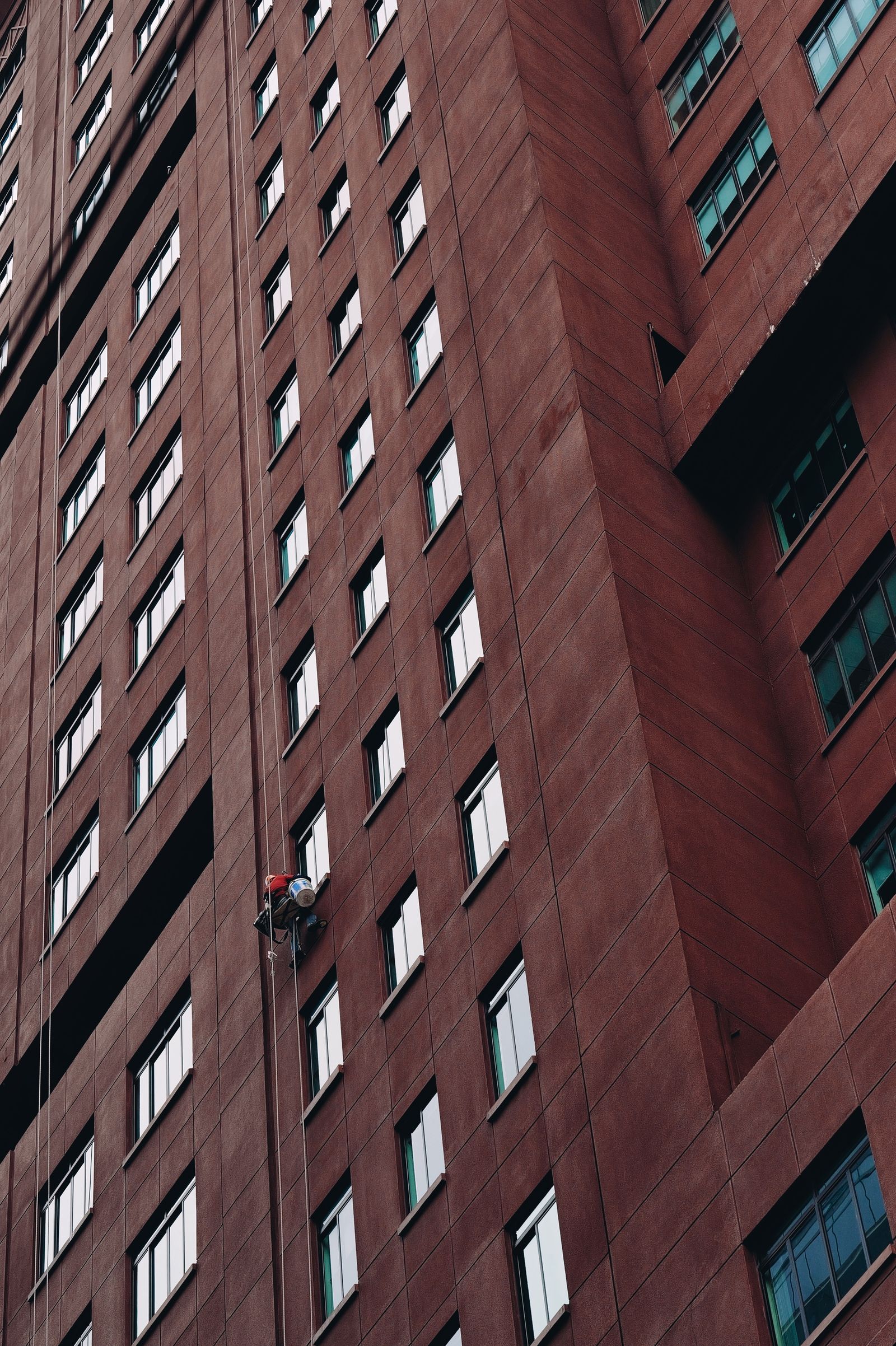
Drone assistance may help on suitable broad upper walls when wind, stand-off distance, visual control, launch and recovery space, public separation, and the water path are manageable. It can reduce some repositioning for compatible parapets, ledges, or sign bands. It does not provide contact glass detailing, brush work on historic ornament, repair access, concealed-condition inspection, or permission to use unsuitable chemistry. Aerial support should be described as one part of a method plan rather than as a replacement for all other access.
A lift can offer controlled contact access but requires setup area, ground bearing, traffic controls, and a suitable work window. Water-fed poles may suit selected glass or facade zones from the ground. Hand detail is often best around doors, signs, canopies, storefronts, historic trim, and sensitive equipment. A hybrid sequence can reduce repositioning while preserving control where the finish or material requires direct attention.
Savannah conditions can include live oaks, utility lines, balconies, active streets, airport-adjacent activity, rooftop equipment, event crowds, port security, and tight historic blocks. Commercial drone operations remain subject to applicable FAA requirements and required authorizations. Property permission does not replace aviation rules. If people cannot be separated, wind changes the rinse path, or recovery space is inadequate, another access method is the better answer.
Protect operations and manage runoff before selecting a method
A method comparison needs an operating plan. Identify guest and patient entrances, accessible routes, student paths, employee doors, loading docks, truck gates, air intakes, landscaping, vehicles, cameras, signs, electrical equipment, and neighboring property. Hospitality, healthcare, education, office, retail, logistics, and port-related sites have different hours and separation needs. The plan should name barriers, spotters, hose routes, security coordination, protection, and the person authorized to stop work.
Savannah campuses and parking areas may drain toward storm inlets, swales, detention areas, garage ramps, pavement joints, low points, or marsh-facing channels. Locate these features before staging and decide how water, chemistry, and overspray will be controlled under the property's requirements. Protect plants, surfaces, public routes, and equipment. A storm drain should not be treated as automatic permission for treated discharge; the actual response depends on product, volume, surface, and site conditions.
Closeout should document completed elevations, deferred work, remaining deposits, pre-existing damage, weather interruptions, access limits, and conditions needing another trade. That record helps the facilities team choose the next action rather than repeating a generic wash. It also keeps cleaning separate from restoration, coatings, sealants, repairs, and leak investigation.
- Map public routes, sensitive equipment, landscaping, utilities, vehicle paths, and drainage before staging.
- Set protection, barriers, hose routes, spotters, weather triggers, and pause authority in advance.
- Separate cleaning from masonry restoration, coatings, sealants, repairs, and active leak investigation.
- Document what was cleaned, what remains, and why any elevation was deferred.
Ask for a Savannah-specific soft-wash and pressure comparison
When requesting a quote, send the address, photos of each elevation, facade materials, approximate height, close-ups of the deposit, desired finish, prior cleaning history, water access, drainage concerns, priority areas, and preferred work window. Mention historic masonry, hotel guests, patients, students, tenants, trucks, security, deliveries, parking, events, or port operations. The provider can then compare soft washing, controlled pressure, poles, lifts, hand detail, and aerial assistance by zone.
Ask the proposal to explain testing, chemistry, pressure limits, protection, access, weather and aviation assumptions, water management, exclusions, and closeout. Drone Building Cleaners can review a Savannah property and build a method around the actual building and its operating constraints. Call +1 239-351-2897, email contact@dronebuildingcleaners.com, or use the quote form to get started.